 07971189853

 Send Inquiry


 Send Inquiry
Pulse Jet Bag Filter
Price 65000 INR/ Unit
MOQ : 1 Unit
Pulse Jet Bag Filter Specification
- Capacity
- 500 m3/hr to 1,00,000 m3/hr (customized)
- Resistance
- 1200-1500 Pa
- Efficiency (%)
- 99.9%
- Diameter
- 100 mm - 200 mm (bag diameter)
- Type
- Black Wire Cloth
- Material
- Metal
- Product Type
- Bag Filter
- Thickness
- 0.8-1.2 mm (bag material)
- Thermal Shrinkage
- <1% at 150C
- Working Temperature
- Up to 250C
- Application
- Industrial
- Dust Emission Level
- Less than 10 mg/Nm3
- Bag Material Options
- Polyester, Polypropylene, Nomex, PTFE
- Filter Bag Length
- 1 m to 6 m
- Compressed Air Pressure
- 4-6 kg/cm2
- Cleaning System
- Pneumatic Pulse Jet with Timer or PLC
- Flange Connection
- As per requirement
- Color/Finish
- Industrial grade Epoxy painted
- Discharge Method
- Manual/Automatic Rotary Air Lock
- Inlet Dust Load
- Up to 100 gm/Nm3
- Filtration Area
- 5 m2 to 3000 m2
- Installation Type
- Vertical/Horizontal
- Frame Structure
- Heavy Duty ISMC/Channel frame
- No. of Bags
- Varies as per requirement (12 to 1000+)
Pulse Jet Bag Filter Trade Information
- Minimum Order Quantity
- 1 Unit
- Payment Terms
- Cash Advance (CA)
- Supply Ability
- 50 Units Per Month
- Delivery Time
- 5 Days
- Main Domestic Market
- All India
About Pulse Jet Bag Filter
The Pulse Jet Bag Filter, a dry filtering innovation, is self-cleaning. With short bursts of compressed air, this Pulse Jet Bag Filter cleans dust and particle debris from the internal filter media's surface. In order to fulfill workplace air quality safety standards and comply with emission laws, it is the most prevalent form of particle air pollution control equipment found in workplaces, such as factories, plants, warehousing, and other industrial or business locations.Superior Dust Filtration and Control
The Pulse Jet Bag Filter is designed to achieve a remarkable dust collection efficiency of 99.9%, making it ideal for diverse industrial environments. Its advanced pneumatic cleaning system, adjustable through timer or PLC, ensures continuous and effective removal of particulates for consistent operation. With emission levels kept below stringent standards, it provides cleaner air and safer workspace conditions.
Customizable and Robust Construction
Adaptable for a wide range of industrial needs, the filter's design allows customization in terms of bag quantity, length, and filtration area. Its heavy-duty ISMC or channel frame, epoxy-painted for enhanced durability, ensures longevity even in challenging industrial settings. Installation flexibility (vertical or horizontal) and optional automatic rotary air lock discharge cater to specific application requirements.
FAQ's of Pulse Jet Bag Filter:
Q: How does the pulse jet cleaning system work in this bag filter?
A: The pulse jet cleaning system utilizes compressed air (4-6 kg/cm2) delivered in short bursts to clean the filter bags by dislodging collected dust, which then falls into a hopper for discharge. The cleaning cycle is controlled by a timer or PLC, ensuring efficient and automatic operation without interrupting the filtration process.Q: What types of industries can use the Pulse Jet Bag Filter?
A: This bag filter is suitable for a wide array of industrial applications, including cement, pharmaceuticals, food processing, metal works, and power plants. Its customizable features and high dust handling capacity make it adaptable to most dust-generating industrial processes.Q: When should filter bags be replaced or maintained?
A: Filter bag maintenance or replacement frequency depends on dust load, operating hours, and application type. Routine inspections are advised, with replacement needed when cleaning becomes less effective or pressure drop exceeds recommended levels (typically 1200-1500 Pa). Scheduled preventive maintenance ensures peak efficiency and longevity.Q: Where can the Pulse Jet Bag Filter be installed?
A: The system supports both vertical and horizontal installation, and can be mounted indoors or outdoors as per site requirements. Flange connections, discharge methods, and frame structure are configured to suit space and operational constraints of your facility.Q: What are the benefits of using different bag materials like Polyester, Polypropylene, Nomex, or PTFE?
A: Each bag material offers unique advantages: Polyester suits general industrial applications, Polypropylene is resistant to acids and alkalis, Nomex withstands higher temperatures, and PTFE excels in chemical resistance and high-temperature environments. Selecting the appropriate material enhances filter lifespan and performance for your specific process.Q: How does the filter maintain low dust emission levels?
A: With efficient pulse jet cleaning and quality bag materials, this filter maintains dust emission levels below 10 mg/Nm3, surpassing many regulatory standards. Proper operation and regular maintenance further ensure emissions remain minimal and workspace air quality is preserved.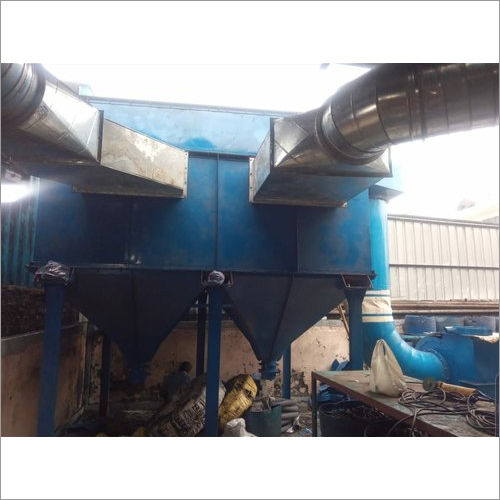
Tell us about your requirement

Price:
Quantity
Select Unit
- 50
- 100
- 200
- 250
- 500
- 1000+
Additional detail
Mobile number
Email

More Products in Bag Filter Category

Portable Mild Steel Dust Collector
Price 45000 INR / Unit
Minimum Order Quantity : 1 Unit
Application : Industrial dust collection, workshops, factories
Material : Metal
Product Type : Dust Collector
Size : Different Available

Cement Silo Bin Vent Dust Collector
Price 100000 INR / Unit
Minimum Order Quantity : 1 Unit
Application : Industrial
Material : Metal
Product Type : Dust Collector
Size : Different Available

Dust Collector Bag Filter
Price 65000 INR / Unit
Minimum Order Quantity : 1 Unit
Application : Industrial
Material : Metal
Product Type : Dust Collector Bag Filter
Size : Different Available

Bag Filter
Price 75000 INR / Piece
Minimum Order Quantity : 1 Piece
Application : Industrial
Material : Metal
Product Type : Bag Filter

VENTILAIR INDIA PVT. LTD.
GST : 06AAACV2847F1ZG
GST : 06AAACV2847F1ZG

- No. 11/7, Mile Stone, Mathura Road, Opp. Flyover Pillar No. 58,Faridabad - 121003, Haryana, India
- Phone : 07971189853

- Mr. Akash (Engineer)
- Mobile : 07971189853
-
 sales@ventilair.in
 Send Inquiry
 Send SMS
VENTILAIR INDIA PVT. LTD.
All Rights Reserved.(Terms of Use)
Developed and Managed by Infocom Network Private Limited.
Developed and Managed by Infocom Network Private Limited.

